
You are using an out of date browser. It may not display this or other websites correctly.
You should upgrade or use an alternative browser.
You should upgrade or use an alternative browser.
So is Canada now wannabe Eurofags?
- Thread starter TOPDAWG
- Start date
CaptainTrouble
Based Member
So now that canada is officially unofficially a member of the EU. Does that make Canadians wannabe Euro fags instead of full Euro fags?
Seriously, Canadians are the worst eurofags imaginable.
Cannot join EU it would require a federal referendum, and a constitutional challenge since the EU supreme court would usurp our supreme court. Also it would require a total financial overhaul including getting rid of the Canadian dollar in favour of a euro. Carney is fucking around but he will never get this off of the ground.

TOPDAWG
Based Member
Well you're not joining the EU. You're just going to become some kind of weird ass submember.
It's already a done deal. Yes, I'm really sure the head of the EU lady just randomly asked Canada to join and Carney was completely unaware.
It looks like you guys are going to be a EU bastard stepchild.
It's also kind of cute how you think liberals have to follow any kind of legal protocol.
It's already a done deal. Yes, I'm really sure the head of the EU lady just randomly asked Canada to join and Carney was completely unaware.
It looks like you guys are going to be a EU bastard stepchild.
It's also kind of cute how you think liberals have to follow any kind of legal protocol.



ayn_rands_ghost
Commie Crusher


For medical but maybe they do not care or enforce recreational?
I know this is from Wiki but....
Legality of muh weed around the world
I know this is from Wiki but....
Legality of muh weed around the world

DEUS_VULT
Based Member
Hey thats cool! Germany and the Czech Republic seem to know whats good. It looks like Ireland is having a pilot program where they are testing legalization of cannabis, according to wikipedia.
I honestly don't know anything about the Czech Republic, other then they also make guns and ammo, so maybe its a hidden gem of Europe or something?
I honestly don't know anything about the Czech Republic, other then they also make guns and ammo, so maybe its a hidden gem of Europe or something?
TOPDAWG
Based Member
@DEUS_VULT you may want to do some research. You realize Germany and Ireland are actually overrun with illegals, right And migrants.
They make canada look like a White nationalist by comparison.
They make canada look like a White nationalist by comparison.


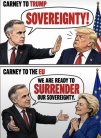
He called it “laughable” that Canada would become an associate member, as European Commission President Ursula von der Leyen proposed earlier in the day during her State of the Union speech.
“Canada’s been a terrible trade partner,” Trump told reporters at the airport in Charlotte, North Carolina, when asked about the proposal. “If I think it’s at all a hostile act, I will put very serious tariffs or stop trading with Europe on many things,” he added.
Trump left open the possibility that he would accept the arrangement if he believed it was made with “a good intention,” but warned that the U.S. could otherwise impose “very heavy tariffs on Europe.”
TOPDAWG
Based Member
I'm not going to lie. This is pretty stupid of trump to say cuz he says I want nothing to do with Canada then Canada says we'll go with someone else. He bitches again so like what do you want dude?
The dude cannot force Canada into a deal or force them to negotiate again. Carneys made his play and I think he's sticking to it. It's simply working out for him.
The dude cannot force Canada into a deal or force them to negotiate again. Carneys made his play and I think he's sticking to it. It's simply working out for him.



CaptainTrouble
Based Member
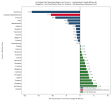
If Canada joined the European Union, its gross contribution to the EU budget would be an estimated €18 billion to €22 billion per year (approximately $27 billion to $33 billion CAD), representing roughly 0.85% to 1.0% of Canada’s Gross National Income (GNI).
Because Canada is an advanced, high-income economy with a GNI per capita well above the EU average, it would become one of the bloc’s largest net contributors, sending €8 billion to €13 billion ($12 billion to $20 billion CAD) more to Brussels each year than it would receive back in regional and agricultural funding.
Because Canada is an advanced, high-income economy with a GNI per capita well above the EU average, it would become one of the bloc’s largest net contributors, sending €8 billion to €13 billion ($12 billion to $20 billion CAD) more to Brussels each year than it would receive back in regional and agricultural funding.

ChevChelios
Peripheral visionary

Koba
Active Member
this shit is all optics spindoctoring and not intended to be a serious bid in any case. It's supposed to show that Carnie is leading Canada to a better alternative than American Reunion, even though just like Ukraine neither really has a chance of ever gaining true union status
CaptainTrouble
Based Member
View: https://x.com/CTVMontreal/status/2100683755652272289
Gotta love Quebec. They'll ruin the whole thing themselves. France be like uhh how come lumberjack French people get special treatment but not us?
CaptainTrouble
Based Member
For fun I decided to have AI make Carney out to be an antisemite. If it works for the jews, why don't we use the same playbook for our goals? Carney's EU push is Antisemitic.
Yet beneath the rhetoric of multilateral cooperation, national security analysts and diaspora leaders increasingly warn of a darker geopolitical consequence: the systematic erosion of the Western security architecture that protects democratic allies, most notably Israel, alongside domestic conditions that carry unsettling echoes of the pre-World War II era.
By establishing an institutional middle-power axis with Brussels, Ottawa contributes to a broader international isolation of the United States. In strategic terms, isolating Washington directly isolates Jerusalem. A weakened, contested American umbrella diminishes deterrence against regional rejectionist states and proxy networks. When Western middle powers withhold diplomatic cover and impose unilateral economic strictures on Israel, they alter the regional balance of power, leaving the Jewish state increasingly encircled and compelled to navigate security threats without collective Western backing.
This structural dependency creates an enduring diplomatic vulnerability. Critics point out that Brussels has frequently demonstrated a propensity for transactional realpolitik—tempering its Middle Eastern foreign policy, moderating criticism of authoritarian regimes, and pursuing accommodation rather than confrontation.
By binding Canadian foreign policy more intimately to European strategic interests, Ottawa risks importing a diplomatic posture historically prone to appeasement. During the 1930s, the prioritization of economic self-preservation and regional neutrality by European democracies allowed aggressive, totalitarian ideologies to metastasize unchecked. A Canadian pivot to a European bloc beholden to foreign energy suppliers invites similar moral compromises, leaving democratic commitments subordinate to raw material security.
Critics argue that Ottawa’s approach to these developments has suffered from acute paralysis:
Across several major European urban centers, demographic shifts over recent decades have coincided with a documented, exponential rise in radicalized anti-Zionism and violent antisemitic incidents. Radicalized ideological movements have taken deep root within segments of European diaspora communities, often insulated by local political reluctance to confront extremism directly. Integrating Canadian labor mobility with regions struggling under these radicalization currents—without rigorous ideological vetting—risks importing the very social friction and extremist pressures currently destabilizing European Jewish communities.
When a Western democracy pivots away from its primary security anchor to align with a bloc prone to economic appeasement, it dilutes the global coalition defending liberal values. For Jewish communities worldwide, the lesson of the twentieth century was absolute: when international alliances splinter, deterrence collapses, and states compromise on extremism for diplomatic convenience, the vulnerable pay the ultimate price first.
The echoes of the twentieth century’s darkest hour serve as an unyielding warning. When Western democracies retreat from clear-eyed deterrence, compromise their core alliances, and rationalize the rising tides of extremism for political convenience, the descent into crisis is rarely sudden—it is incremental, rationalized at every step until the damage is irreversible. By unmooring itself from North American security guarantees to embrace an energy-compromised European consensus, Ottawa risks participating in the very patterns of appeasement that once left the Jewish people defenseless before catastrophe.
In an increasingly volatile global order, the illusion of comfortable neutrality has expired. Canada now stands at an existential crossroads where evasion is no longer an option. If the nation hopes to stand on the right side of history, it cannot sleepwalk into alignments that isolate its most vital allies, dilute Western defense, or treat the safety of Jewish communities as collateral damage in a shifting geopolitical game. The test of modern statecraft is not how skillfully a government maneuvers around uncomfortable truths, but whether it possesses the resolve to confront them before history repeats itself.
The New Appeasement: How Carney’s European Pivot Revives Pre-Holocaust Complicity and Fuels Global Antisemitism
OTTAWA — Canada’s accelerating diplomatic pivot toward the European Union marks the most profound strategic rupture in North American foreign policy in modern history. Framed by Prime Minister Mark Carney as an essential bid for "collective resilience" amid escalating tariff friction with Washington, the maneuver seeks to anchor Canada to a European bloc determined to chart a path independent of the United States.Yet beneath the rhetoric of multilateral cooperation, national security analysts and diaspora leaders increasingly warn of a darker geopolitical consequence: the systematic erosion of the Western security architecture that protects democratic allies, most notably Israel, alongside domestic conditions that carry unsettling echoes of the pre-World War II era.
Isolating Washington and Fracturing the Israeli Defense Axis
For decades, the survival and deterrence posture of the State of Israel in an unstable Middle East has depended on an unwavering strategic compact with Washington, underwritten by a united Western front. Canada’s deliberate effort to balance away from the United States risks accelerating an ideological and geopolitical wedge between North America and Europe.By establishing an institutional middle-power axis with Brussels, Ottawa contributes to a broader international isolation of the United States. In strategic terms, isolating Washington directly isolates Jerusalem. A weakened, contested American umbrella diminishes deterrence against regional rejectionist states and proxy networks. When Western middle powers withhold diplomatic cover and impose unilateral economic strictures on Israel, they alter the regional balance of power, leaving the Jewish state increasingly encircled and compelled to navigate security threats without collective Western backing.
Hydrocarbon Realpolitik and European Capitulation
The ideological roots of Europe’s foreign policy towards the Middle East are structurally bound to resource dependence. Facing chronic energy deficits following the disruption of Eastern European supplies, the European Union has intensified its reliance on Middle Eastern and Gulf hydrocarbon exporters.This structural dependency creates an enduring diplomatic vulnerability. Critics point out that Brussels has frequently demonstrated a propensity for transactional realpolitik—tempering its Middle Eastern foreign policy, moderating criticism of authoritarian regimes, and pursuing accommodation rather than confrontation.
By binding Canadian foreign policy more intimately to European strategic interests, Ottawa risks importing a diplomatic posture historically prone to appeasement. During the 1930s, the prioritization of economic self-preservation and regional neutrality by European democracies allowed aggressive, totalitarian ideologies to metastasize unchecked. A Canadian pivot to a European bloc beholden to foreign energy suppliers invites similar moral compromises, leaving democratic commitments subordinate to raw material security.
The Domestic Vacuum: Enfeebled Responses to Extremism
The geopolitical realignment coincides with severe domestic anxieties over the federal government’s enforcement against antisemitism and foreign-linked extremism. Over the past three years, Jewish institutions, day schools, and synagogues across Canada have faced targeted vandalism, intimidation, and violence.Critics argue that Ottawa’s approach to these developments has suffered from acute paralysis:
- Inconsistent Deterrence: Repeated acts of communal intimidation have often been classified or treated under broad protest protections, resulting in high rates of withdrawn or diverted hate-crime charges.
- Foreign Interference Ambivalence: Prolonged delays in decisively designating and dismantling networks tied to the Iranian regime—including prolonged hesitation over the Islamic Revolutionary Guard Corps (IRGC)—have signaled vulnerability to state-sponsored extremism operating on Canadian soil.
- Performative Reassurance: While federal leaders regularly denounce Jew-hatred in rhetoric, community organizations warn that enforcement remains weak, leaving minority institutions forced to rely on private security infrastructure.
Mobility Schemes and the Importation of Radicalization
The strategic integration pursued with Brussels extends beyond trade into potential mobility arrangements, including expanded youth exchange and labor mobility agreements. While intended to facilitate commerce and talent exchange, this dynamic introduces severe integration risks that Canadian policymakers have largely sidestepped.Across several major European urban centers, demographic shifts over recent decades have coincided with a documented, exponential rise in radicalized anti-Zionism and violent antisemitic incidents. Radicalized ideological movements have taken deep root within segments of European diaspora communities, often insulated by local political reluctance to confront extremism directly. Integrating Canadian labor mobility with regions struggling under these radicalization currents—without rigorous ideological vetting—risks importing the very social friction and extremist pressures currently destabilizing European Jewish communities.
The Unlearned Lessons of Pre-War Realignment
The historical parallels to the interwar period do not rest on exact ideological duplication, but on systemic behavior: the retreat of stable alliances into fragmented blocs, the elevation of short-term economic insulation above democratic security, and a dangerous domestic tolerance for street-level intimidation.When a Western democracy pivots away from its primary security anchor to align with a bloc prone to economic appeasement, it dilutes the global coalition defending liberal values. For Jewish communities worldwide, the lesson of the twentieth century was absolute: when international alliances splinter, deterrence collapses, and states compromise on extremism for diplomatic convenience, the vulnerable pay the ultimate price first.
The Gathering Storm: Choosing the Right Side of History
The trajectory Mark Carney is charting is not merely a pragmatic recalibration of trade corridors; it is a perilous geopolitical gamble whose ultimate toll will be measured not in economic output, but in moral currency and human safety. History maintains a merciless ledger for nations that mistake expediency for strategy, and for leaders who convince themselves that accommodation and moral ambiguity can masquerade as sophisticated diplomacy.The echoes of the twentieth century’s darkest hour serve as an unyielding warning. When Western democracies retreat from clear-eyed deterrence, compromise their core alliances, and rationalize the rising tides of extremism for political convenience, the descent into crisis is rarely sudden—it is incremental, rationalized at every step until the damage is irreversible. By unmooring itself from North American security guarantees to embrace an energy-compromised European consensus, Ottawa risks participating in the very patterns of appeasement that once left the Jewish people defenseless before catastrophe.
In an increasingly volatile global order, the illusion of comfortable neutrality has expired. Canada now stands at an existential crossroads where evasion is no longer an option. If the nation hopes to stand on the right side of history, it cannot sleepwalk into alignments that isolate its most vital allies, dilute Western defense, or treat the safety of Jewish communities as collateral damage in a shifting geopolitical game. The test of modern statecraft is not how skillfully a government maneuvers around uncomfortable truths, but whether it possesses the resolve to confront them before history repeats itself.